
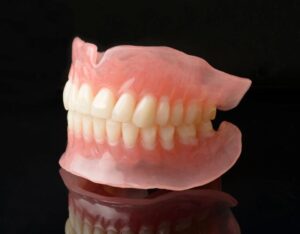
Each year, millions of people get new dentures. This form of tooth replacement is so common that it is almost taken for granted! However, while comfortable and beautiful dentures are a relatively new innovation, their history actually stretches back thousands of years. Would you like to learn more about their evolution? This blog post lets you take a step back in time.
Ancient Origins: Early Materials and Craftsmanship
Tooth loss has been a problem since the beginning of humanity, and attempts to replace missing teeth date back to ancient times. In Italy, for example, the Etruscans crafted prosthetic teeth from animal or human teeth and string them together with gold wire.
Other cultures made varying attempts to replace lost teeth. Evidence suggests that some peoples used things like shells, carved stones, or animal parts in their efforts to rebuild a complete smile.
Dentures Through the Centuries
You might have heard that George Washington, the first president of the U.S., wore wooden dentures. That claim has been proven false, but evidence does indicate that he owned multiple sets of dentures. They were made of a mix of materials, such as ivory, human teeth, animal teeth, and metals.
Ivory stayed in use as a denture material for generations, but it had some big downsides. Not only was it expensive and rare, but it could also stain easily, collect odors, and get worn down quickly.
19th Century Developments: The Increasing Need for Dentures
While tooth replacement has always been important, it became even more of a need in the 1800s. Thanks to industrial advances, sugar went from a rare treat to an everyday staple. As you can imagine, this trend significantly raised incidences of painful tooth decay and tooth loss.
Denture makers responded in a rather morbid way; they sometimes collected human teeth from battlefields or other deceased individuals. Even though this raised serious concerns about sanitation and ethics, it emphasized the need for new materials and methods.
Porcelain and Rubber Open the Door for Better Dentures
The 1800s saw porcelain become more common for use in dentures. It was stronger and more resistant to stains and wear than materials like ivory. However, it could look unnaturally bright and could chip and break relatively easily. Innovators improved porcelain dentures with the use of clever springs and wires that helped them function better with a lower risk of breakage.
In the mid-1800s, hardened rubber stepped onto the scene as a material for denture bases. It was relatively affordable and could adapt more easily to the curve of human gums. As a result, dentures became more accessible for the general population.
The Arrival of Modern Dentures
In the 1940s, acrylic resin replaced other materials as the standard option for denture bases. It is durable, comfortable, and natural-looking. Techniques for creating porcelain also evolved greatly throughout the years, so porcelain dentures become more natural-looking and more practical for everyday use.
In the modern era, new inventions — such as digital impressions, three-dimensional imaging techniques, and dental implants — have made sure that dentures fit better than ever. Indeed, modern prosthetics are comfortable for all-day wear and look almost exactly like real teeth!
Dentures have a long and fascinating history behind them. If you ever need to replace your teeth, you can find comfort in knowing that centuries of creative thinking have paved the way for your new smile.
Meet the Practice
At Gillis Dental Professionals, our team uses advanced technology and extensive skill to design dentures that function well, fit comfortably, and look beautiful. If you are curious about dentures and what to expect from them, we would be happy to answer your questions. Request a consultation by contacting our team in Needham at 781-202-6357.